The back story
From the Guiniguada to Las Canteras: how Las Palmas shops, the back story
A market built from 1856, a street named after Seville’s Triana, and a mall open on Sundays.
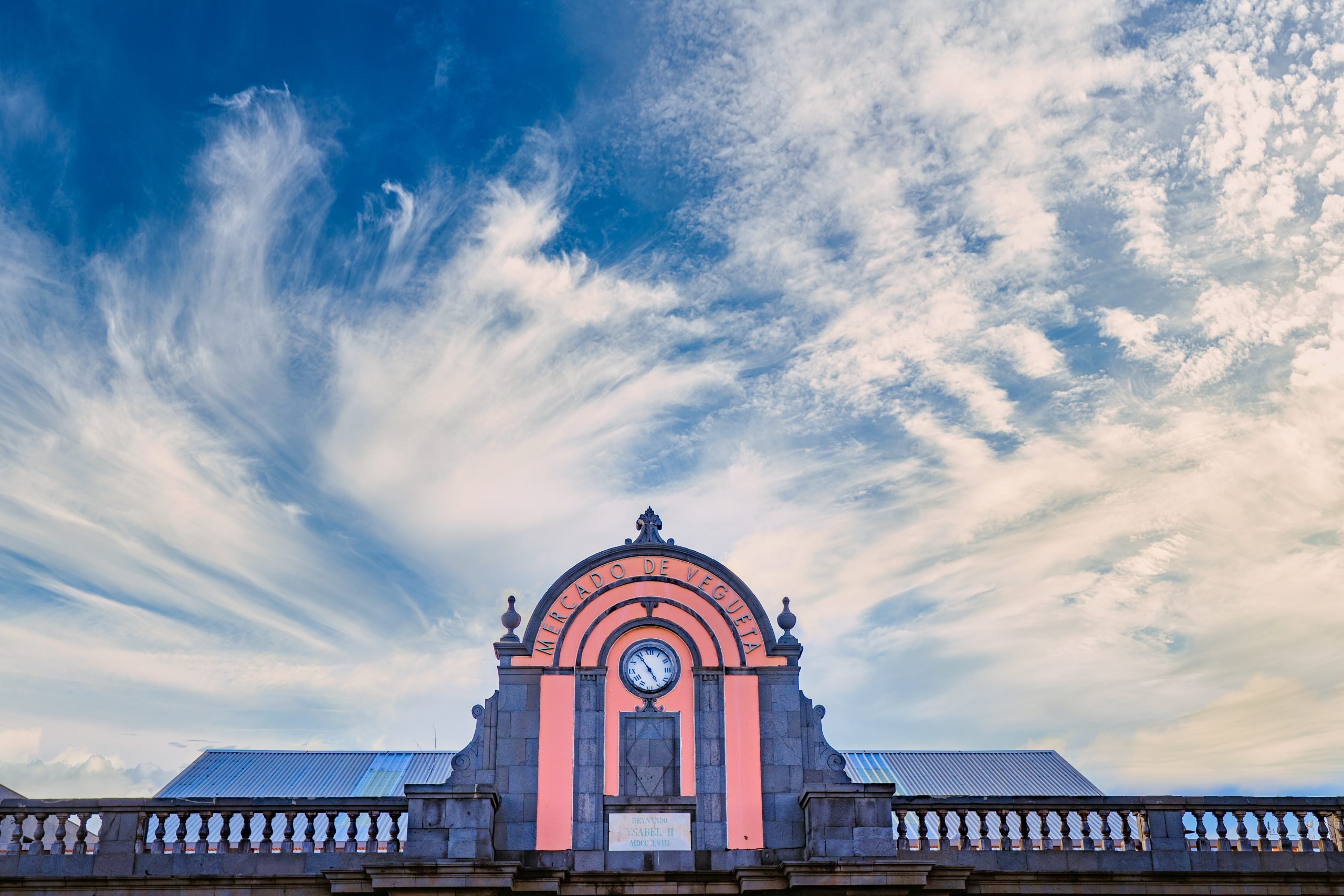
Photo Credit
Image courtesy of © Mercado de VeguetaWhy does Las Palmas shop on foot? Because its shopping grew street by street from the camp of 1478: a market in the old quarter, a high street named after Seville, and, beside the beach, a shopping centre that now opens on Sundays. Here is the back story of the three places on our list, checked against the market’s, the traders’ and the city’s own pages in November 2026.
The market of the old quarter
The Mercado de Vegueta calls itself the first organised market in the Canaries. Building began in 1856, to designs by Manuel de Ora and Manuel Ponce de León y Falcón, in Vegueta, the district that grew from the Castilian camp pitched by the Guiniguada ravine on 24 June 1478.
Inside, under one roof, around 100 stalls sell local fruit and vegetables, Atlantic fish and shellfish, fresh meat and artisan cheeses, with spices and specialist shops between them. It opens Monday to Friday from 8am to 2pm and on Saturday to 2.30pm, so this is a morning ritual: by lunch, the fish has gone home with somebody else.
The market has also taken on a second job. Its programme “Vegueta late desde su mercado” adds visits, concerts and quick-painting days, meant to revive the commercial, cultural and social life of the quarter, promote local, zero-kilometre produce and benefit more than 500 shops and bars in Vegueta and Triana. It is a market lending its crowd to its neighbours.
Seville on the Atlantic
Triana grew as Vegueta expanded. Many of the conquerors came from Seville, the Gran Canaria tourism board explains, so they named the new district and its main street after Seville’s Triana. Today the street is pedestrian and one of the city’s main open-air shopping areas, its family businesses still trading beside the chain stores.
Look up as you shop, though: many of the modernist houses were rebuilt in the early 20th century, and some rails of the old tram, “La Pepa”, can still be seen. The trams have gone; the rails have stayed, as if the street were keeping their place. Zona Triana, the traders’ association, lists more than 170 members: food, local commerce and culture, all on foot.
Triana’s cultural anchors sit among the shop windows: the Gabinete Literario, the society founded in 1844, beside Plaza de Cairasco, and the Teatro Pérez Galdós, opened in 1888. The shopping street, in other words, was laid out by people who expected an audience, and its façades still dress for one.

Photo Credit
Image courtesy of © Bengt Nyman · CC BY-SA 4.0 via Wikimedia CommonsA port that brought the world
Why did a colonial city grow such a commercial appetite? The port is part of the answer. British families settled here in the early 19th century, partly for trade, and on 26 February 1883 the British firm Swanston began building the Puerto de La Luz, now the Puerto de Las Palmas, still a major source of work, the city says. A city that has traded with ships this long keeps its shops where people walk.
The trams have gone; the rails have stayed, as if the street were keeping their place.
Sundays by the beach
The newest habit is the mall, and it is the one that most resembles shopping anywhere else. Centro Comercial Las Arenas, near Las Canteras beach, has shops, a cinema, restaurants open late and a hypermarket. It now opens every Sunday, a change it announced with some pride, its shops from 10am to 9pm, and from 10am to 10pm Monday to Saturday.
Shop hours follow the Spanish clock, an hour behind it: shops generally open continuously from 10am to 9pm, though some close between 2pm and 5pm, especially in summer, and the Canaries keep UTC+0, an hour behind mainland Spain, Spain’s tourism board notes. Cards, mainly Visa and Mastercard, are very widely accepted; some shops ask for a minimum of around €10.
In December the shopping walk ends on the sand. On Las Canteras, the Belén de Arena, a nativity scene of sand sculptures first made in 2006 when it drew 40,000 visits in a week, counted 260,000 visitors in 40 days in a recent edition, by its own count; check its site for this season’s dates. Our advice: market in the morning, Triana at noon, the beach at dusk.
Why it's on our list
- The market of the old quarter
- Seville on the Atlantic
- A port that brought the world
- Sundays by the beach
Location
The map comes from Google Maps, which sets its own cookies once it loads.
More in depth
 The back storyGrids, cobbles and cloud forest: walking the Canaries, the back storyLa Laguna’s grid that crossed the Atlantic, the camp that became Las Palmas, and Garajonay’s mist.
 The back storyGetting to and between the islands: ferries, island flights and the Tenerife tramFerries between the seven islands, the operators’ own crossing times, and when to fly instead.
 Coming soonComing soon: the tech the makers have promisedOfficially announced tech, from Gemini glasses to Meta's VR specs, plus the newest arrivals.